.CampingforTwo2-c2c93d51c2250ffb461bf9f869c742297552f7d9565181a7d9ca09a95b6f7710.png)
Beginners’ Guide to Camping

Our innate desire to get away from the city lights and into the outdoors goes back to our natural primal instincts. There’s something about being in the middle of nowhere, surrounded by trees, mountains, and water that provides a relaxing getaway that we all need - especially if you live in a concrete jungle like we do in Los Angeles. So if you’re thinking about going camping but don’t know where to start, we’ve got you covered.

Find a Guide
The first step is to find yourself a guide - you may have one in your own circle of friends, or be able to find one in a local Facebook group or even in your neighborhood. If you don’t have someone to lean on, that’s ok! You can still do this. Just read on and in this guide, we’ll give you all the tools you need to plan your first camping trip.
With that said, learning from someone who is experienced in camping is the quickest way to learn the basics. Experienced campers are not only likely to lend you gear such as a tent or sleeping bag (pre-COVID), but also all the knowledge they have, because they want to make sure you have a great experience. Even better — ask to join them on their next trip so they can actually show you the ropes! Adventure loves company.

Pick a Location
The next step generally starts with picking a place to visit. It can be as grand as a national park, as local as state park/forest, or even as low-key as the beach! Most national parks and state parks have designated campgrounds for public use that are developed with amenities such as bathrooms, fire pits/grills, picnic tables and even pergolas. Some are free but most will require you to make a reservation. So, be sure to plan your camping trip ahead of time and reserve the days/nights you wish to stay. It is also important to check the weather for the duration of your stay so you can plan appropriately.
While we’ve definitely had some epic National Park trips, some of our most memorable trips have taken place just 40 minutes away from home, in our local mountains. If you need inspiration on where to visit first, check out our “Places to Visit” page.

Gather Your Gear
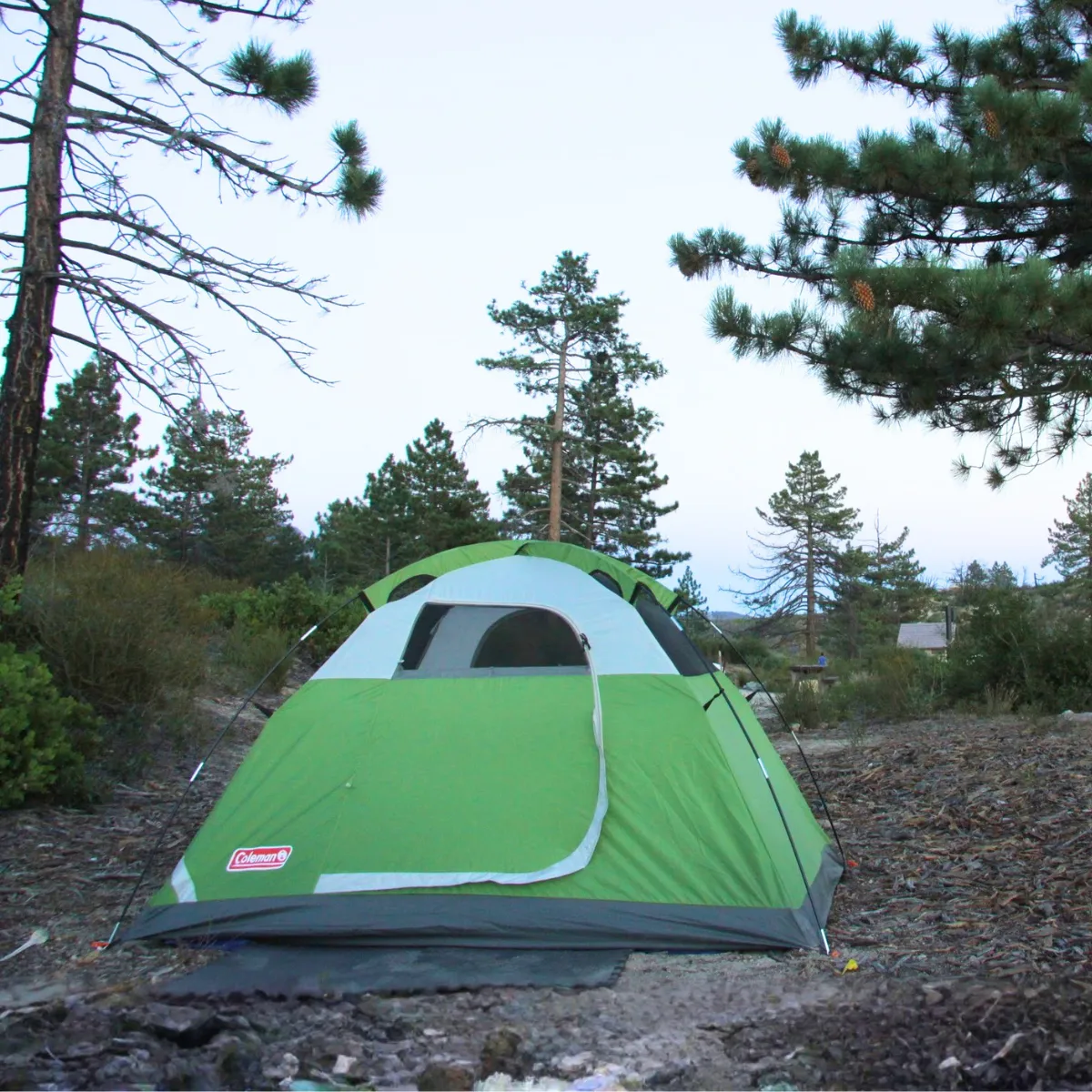
Once you’ve determined where you want to stay and camp, it’s time to pick out what you need. The essentials include:
- Tent
- Sleeping bag
- Sleeping mat or pad
- Food & water
- A light source for nighttime (flashlight, headlamp, cell phone)
- Trash bag
Once you have gathered the essentials, it’s time to selectively pick items that meet your needs, not wants. Here are some “must need” items:
- Toiletries (toothbrush, contact lens case, sanitizer, etc.)
- Firewood (if permitted)
- Clothes for the weather and duration of your stay (don’t forget your pajamas!)
- Entertainment (activities for kids, camera, etc.)
Now that you’ve gotten most of your kit assembled and can determine how much extra space is left, you can choose items that you want to have.
For some people, it might be a book or two and their special mug for hot-cocoa. For me, it would be an iPad with a few movies pre-loaded. My wife likes to bring bedding from home. I know of a friend that brings a hand vacuum for inside the tent. These are things that make the trip personal to you and bring a sense of home-comfort with you. Camping is meant to be relaxing, enjoyable, and personal.

Set a course!
You’ve picked a place and packed your gear. You’re excited and now it’s time to go! Double check you haven’t forgotten anything and do one last check on the route and the weather. We like to include at least one stopping point along the way where we know we can make a pit stop for gas, last-minute supplies, restroom run, or some food for the drive up. If you’re crossing state lines, plan a few stops along the way to break up the trip. If everything looks good... mission control, we are cleared to launch! The journey to the campsite should be fun and exciting — especially if you picked a place that’s inside a National Park like Yosemite.

Leave no trace.
Campers before you understood and practiced the Seven Principles of Leave No Trace. It is a framework of minimum impact practices that should be followed by anyone who wants to visit the outdoors. While the Seven Principles began as a guide for remote backcountry use, the applied use became universal for everyone to preserve the campgrounds for future generations. In other words, pack out what you pack in, pick up any trash, even if it’s not yours, and respect the wildlife as it is.
Click here to learn more about the Seven Principles of Leave No Trace.
Now, Adventurer, it’s time for you to make your reservation under the stars and enjoy nature as our Creator intended.
Happy camping!